

Business content
From "throwing away" to "utilizing." Three businesses that circulate resources and value. Nippon Future Co., Ltd. develops a consistent circular business model, ranging from the demolition of buildings to the export of resulting resources and Japanese products, as well as the supply of next-generation energy resources.
Demolition business
We handle demolition work for all types of buildings, including wooden, steel, and reinforced concrete (RC) structures. We do not simply tear down buildings; we strive for "meticulous demolition" with a focus on subsequent land use and resource recycling. We manage everything from preliminary surveys and construction planning to neighborhood relations and the proper disposal of industrial waste. By strictly adhering to legal compliance and a safety-first approach, we ensure construction projects are in harmony with the local community.
【Main Services & Features】
• Various Demolition Works: Wooden houses, steel-framed apartments, RC buildings, interior demolition, etc.
• Integrated Management System: Total support from filing demolition notices to the collection, transport, and disposal of waste.
• Thorough Neighborhood Measures: Meticulous execution aiming for zero complaints through noise, vibration, and dust control.

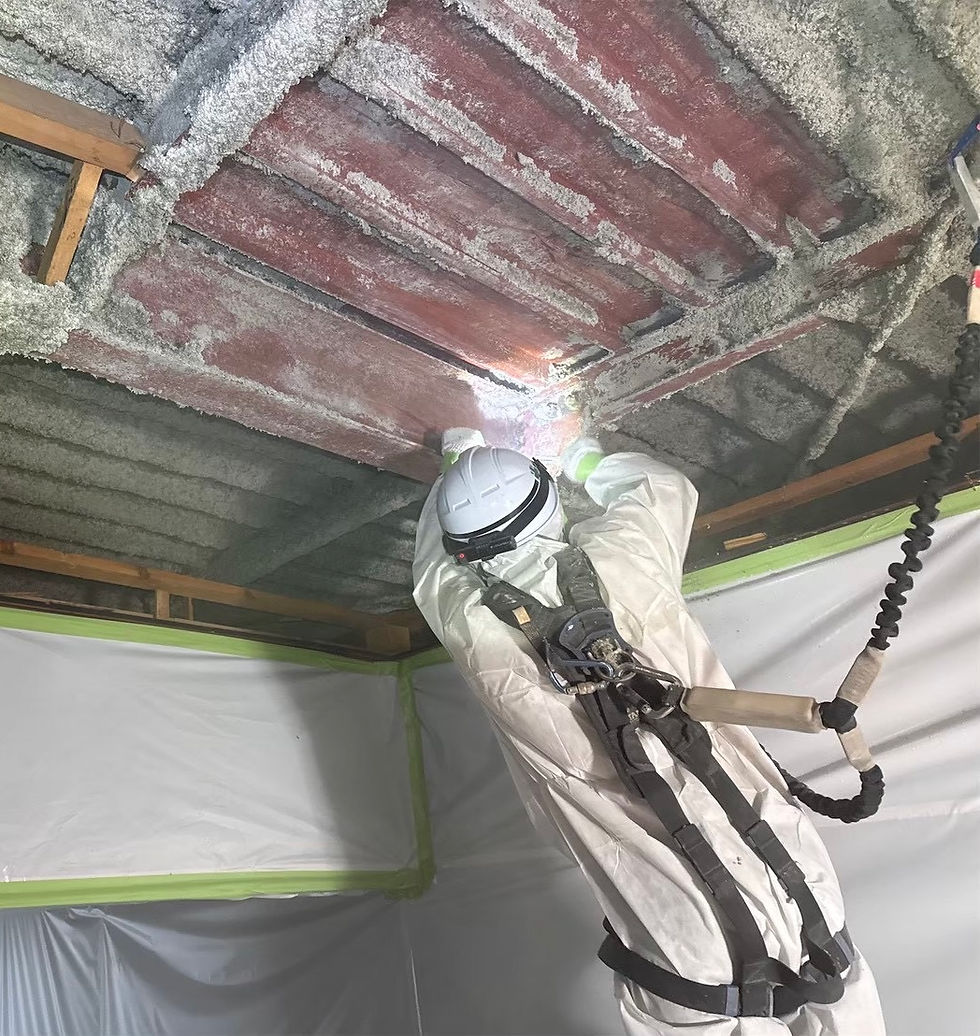
Asbestos Survey and Removal Services
We inspect the condition of each site and the building materials used, and propose a suitable work plan with careful consideration for safety and the surrounding environment.
Our Main Services
-
Preliminary surveys for asbestos-containing building materials
-
Sample collection and arrangement of laboratory analysis
-
Asbestos removal work
-
Removal of asbestos-containing building materials
-
Protective enclosure and dust-control measures
-
Cleaning and inspection after removal work
-
Collection, transportation, and proper disposal of industrial waste
-
Support with notifications and submissions to the relevant authorities
-
Integrated services covering demolition and renovation work
Industrial Waste Collection
Industrial waste produced at each worksite is properly sorted and managed, then safely transported to licensed disposal facilities or intermediate treatment facilities in accordance with all applicable laws and regulations.
Main Types of Waste Handled
-
Construction debris
-
Waste plastics
-
Waste wood
-
Waste paper
-
Textile waste
-
Metal waste
-
Waste glass, concrete, and ceramics
-
Gypsum board
-
Mixed waste
-
Other industrial waste covered by our licenses

Energy Resources Business
Toward the realization of a carbon-neutral society, we supply resources that serve as raw materials for biodiesel and SAF (Sustainable Aviation Fuel). Waste cooking oil discharged from households, restaurants, and food factories, as well as by-products generated in the oil refining process, can be reborn as precious energy resources through proper collection and refining. By collecting these "unused oils and fats" and supplying them to domestic and international refineries, we contribute to the construction of a sustainable energy society that does not rely on fossil fuels.
【Business Details】
• Collection and Purchase of Waste Cooking Oil: Collection of used frying oil, etc., from restaurants, school lunch centers, factories, and more.
• Resource Import/Export: Trading of oils and fats used as raw materials for Biodiesel Fuel (BDF) and SAF.

Trade/export business
We deliver "Japanese products," world-renowned for their durability, precision, and energy-saving performance, to countries that need them. Leveraging our unique overseas network, we export primarily agricultural machinery and industrial equipment. Even if machinery has finished its role in Japan, well-maintained Japanese products remain active overseas for a long time. By matching demand from a global perspective, we revitalize economic activities both in Japan and around the world.
【Main Items Handled】
• Agricultural Machinery: Tractors, combine harvesters, and all other agricultural implements.
• Industrial Machinery: Heavy construction equipment, precision machinery, factory equipment, etc.
• Parts and Materials: Various machine parts and maintenance supplies.

Biomass Pellet Production and Sales
Converting rice husks into pellets reduces their bulk volume, improves handling, transportation, and storage efficiency, and enables a more stable supply of fuel to boilers and other combustion systems.
Main Raw Materials
-
Rice husks
-
Waste wood
-
Sawmill offcuts
-
Agricultural residues
-
Waste paper
-
Other biomass resources suitable for use as fuel

